
Global review
Bambi
Write a global rating and review for this title.
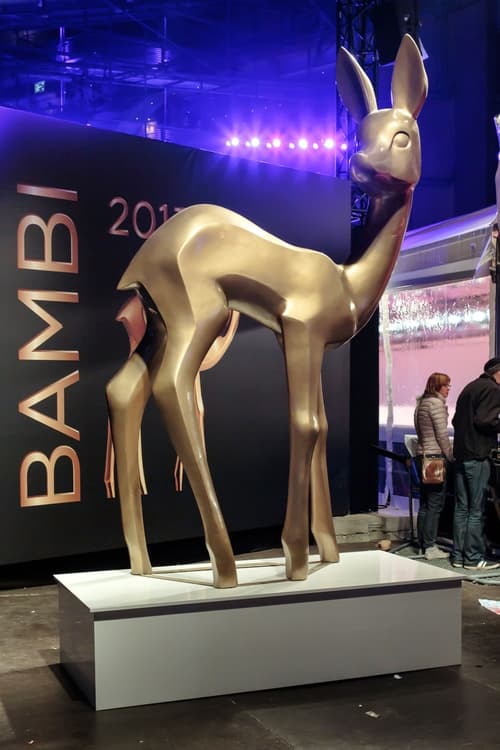
The Bambi, often called the Bambi Award and stylised as BAMBI, is a German award presented annually by Hubert Burda Media to recognize excellence in international media and television to personalities in the media, arts, culture, sports, and other fields "with vision and creativity who affected and inspired the German public that year", both domestic and foreign. First held in 1948, it is the oldest media award in Germany. The trophy is named after Felix Salten's book Bambi, A Life in the Woods and its statuettes are in the shape of the novel's titular fawn character. They were originally made of porcelain until 1958, when the organizers switched to using gold, with the casting done by the art casting workshop of Ernst Strassacker in Süßen.
Community reviews
Sign in / sign up to write a review.
Sign in / Sign upYour review
Share your take in seconds: rate it, add a quick comment, and join the conversation.
Where to watch
Watch now
Find the best option right now, compare subscription and purchase offers, and jump to the platform in one click.
All offers
Streaming information by JustWatch
No streaming providers found in United States.
Watch Peak Clips
Best clips for this title
Open ready-to-use moments, then jump into the full clips workspace in one click.
Similar titles
What to watch next
If you liked this series, here are close picks with a similar vibe.
No similar titles found for now.
About
More about this title
The Bambi, often called the Bambi Award and stylised as BAMBI, is a German award presented annually by Hubert Burda Media to recognize excellence in international media and television to personalities in the media, arts, culture, sports, and other fields "with vision and creativity who affected and inspired the German public that year", both domestic and foreign. First held in 1948, it is the oldest media award in Germany. The trophy is named after Felix Salten's book Bambi, A Life in the Woods and its statuettes are in the shape of the novel's titular fawn character. They were originally made of porcelain until 1958, when the organizers switched to using gold, with the casting done by the art casting workshop of Ernst Strassacker in Süßen.